
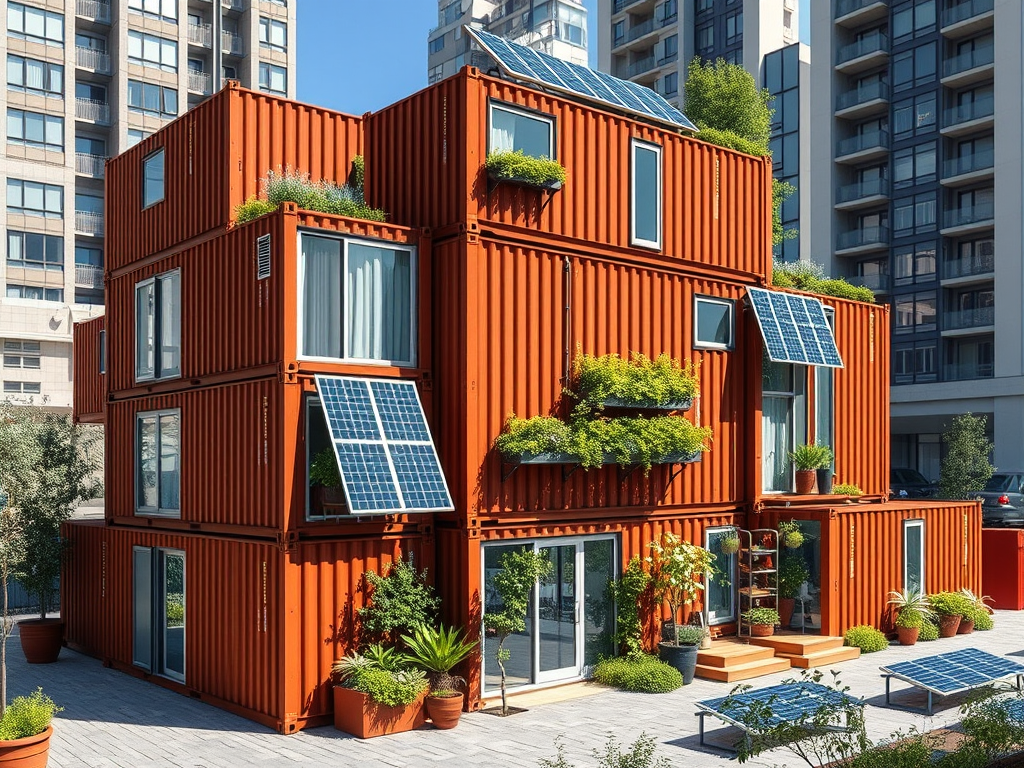
A 50-Year Outlook
Introduction Container-based architecture—repurposing ISO shipping containers into homes, offices, pop-ups, and industrial modules—has moved from novelty to mainstream. Here’s why container buildings will remain attractive and grow in use over the next 50 years.
- Built-in standardization and global supply
- ISO containers are manufactured to uniform dimensions and corner-casting interfaces, enabling modular, repeatable design and straightforward stacking/connectivity.
- Millions of standard units exist worldwide; even with fluctuating trade, a steady supply of used and new containers will persist, keeping raw-unit availability and costs relatively stable.
- Speed and cost efficiency
- Modular container units drastically shorten build timelines (weeks vs months), lowering labor and financing costs.
- For many mid-market use cases (affordable housing, temporary campuses, retail pop-ups), all-in construction cost per m2 is competitive with traditional light-frame or modular builds, especially where site access is constrained.
- Adaptability and scalability
- Containers are inherently modular: units can be combined horizontally and vertically, reconfigured, expanded, or removed, supporting lifecycle reuse and changing occupancy needs.
- This flexibility suits rapid urbanization, disaster relief, temporary events, and phased development strategies.
- Resilience and durability
- Corten steel shells are robust against weather and mechanical damage; with proper retrofit and maintenance, containers can provide a long service life.
- Their structural capacity supports multi-story stacking and transportability—critical for mobile or redeployable infrastructure.
- Sustainability and circular economy benefits
- Reusing containers diverts steel structures from scrap and avoids part of embodied carbon associated with new-build framing.
- Container modules pair well with off-site prefabrication, energy-efficient envelopes, and integrated renewables (PV, batteries), improving lifecycle environmental performance.
- As circular-economy regulations and corporate ESG goals tighten, repurposed containers will gain policy and market support.
- Urban land pressure & densification
- As cities densify and land costs rise, vertical, stackable container modules enable incremental density on small footprints (infill, laneway housing, rooftop additions).
- Pop-up or temporary use of vacant lots with container clusters helps activate underused urban land with low capital commitment.
- Technological enablement
- Advances in insulation, HVAC miniaturization, integrated MEP modules, and lightweight composites solve historical weaknesses (thermal bridging, condensation, acoustics).
- Digital design, automated cut-and-fit, and factory prefabrication improve quality, reduce waste, and scale production.
- Regulatory and market evolution
- Building codes and standards are increasingly recognizing modular and prefabricated solutions; certification pathways for container conversions are maturing.
- Financial instruments (modular lending, lease-to-own) and insurance products tailored to modular buildings are growing, lowering barriers for developers and occupants.
- Niche advantages that will become mainstream
- Rapid-deploy shelters for disaster response, remote workforce accommodation, urban micro-retail, and data center pods all map well to container form-factors.
- Military, mining, and maritime sectors will continue to drive technical improvements that spill into civilian markets.
- Risks and limitations — and how they will be mitigated
- Thermal performance, corrosion, and VOCs from old floors were past concerns; solutions (composite floors, advanced insulation, remediation standards) are widely available.
- Perception and design quality: high-quality architectural treatment and standard finishes will shift public perception from “cheap box” to desirable modular architecture.
- Supply constraints for used containers could shift demand to purpose-built modular shells with ISO-compatible interfaces—retaining the same modular advantages.
Bold 50-Year Outlook (concise)
- Container-derived modular construction will capture growing shares of affordable housing, temporary infrastructure, and specialist industrial facilities—conservatively 10–25% of mid-rise modular starts in many markets by 2050.
- Hybrid supply: repurposed containers will coexist with factory-built ISO-compatible modules engineered for longevity and thermal performance.
- Policy and carbon accounting will favor reuse and modularity, making container-based solutions a durable tool in urban planning and rapid-deployment infrastructure.
Conclusion Container buildings combine standardization, speed, mobility, and an increasingly competitive sustainability profile—qualities that match the 21st century’s needs for flexible, lower-cost, and lower-carbon built forms. With technological fixes for past weaknesses and maturing markets and regulations, container architecture will remain a practical, scalable approach for many of the world’s housing, commercial, and emergency-infrastructure challenges for decades to come.